Development
Why Historic Adaptive Reuse Is the Future of Urban Development
May 11, 2025
-
Michael Rivait
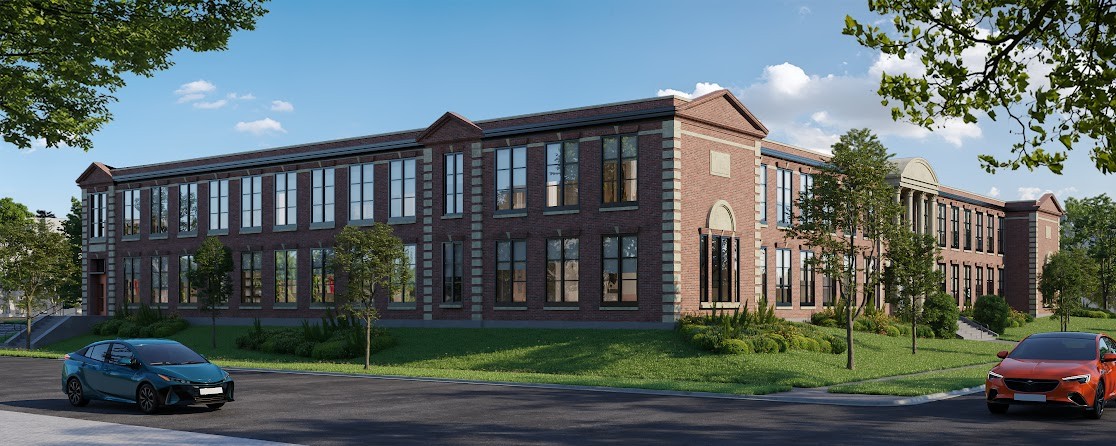
There's a quiet revolution happening in America's cities, and it doesn't involve tearing anything down. Adaptive reuse — the practice of repurposing existing historic structures rather than demolishing them — has emerged as one of the most intelligent, sustainable, and community-driven approaches to urban development. Old churches, schools, theaters, and industrial buildings are being transformed into vibrant residential communities, and the results speak for themselves. For cities like Detroit, where architectural heritage runs deep and underutilized buildings are abundant, adaptive reuse isn't just a trend — it's the most responsible path forward.
The case for adaptive reuse starts with sustainability. Repurposing an existing structure preserves the embodied energy already invested in its materials — the steel, brick, timber, and concrete that took significant resources to produce and assemble. New construction, by contrast, generates substantial waste and carbon output before a single resident ever moves in. At Design Build Detroit, we align our projects with LEED standards wherever possible, layering modern energy-efficient systems into historic shells to create buildings that are as environmentally responsible as they are beautiful. The result is a living space with the character of the past and the performance of the future.
Beyond sustainability, there's an economic argument that's hard to ignore. Historic rehabilitation projects in Michigan are eligible for significant state and federal tax credit programs that make the numbers work in ways that ground-up construction simply cannot replicate. These incentives exist because policymakers understand what developers like us have known for decades — that preserving the built environment creates more long-term value than replacing it. Combined with our in-house construction model that eliminates developer fees and third-party markups, we're able to deliver exceptional projects at a cost efficiency that protects investor returns from day one.
But perhaps the most compelling reason to embrace adaptive reuse is what it does for a community's identity. When a 1912 building becomes Elaine Lofts, or a 1924 church becomes St. Agnes Lofts, residents aren't just renting an apartment — they're becoming part of a story. That sense of place and history is something you simply cannot manufacture in a new build. It attracts a different kind of resident, fosters a stronger sense of community, and contributes to the authentic neighborhood character that makes urban living genuinely worth choosing. At Design Build Detroit, we don't just develop buildings — we steward legacies.
Related